
A business should not invest in AI because it is new or impressive. It should use it when it helps staff respond faster, reduce errors or spend less time on repetitive tasks.
An AI agent is software that can understand a request and use approved business information and tools to carry out the steps needed to fulfil it.
A chatbot mainly gives an answer. An agent can also check a record, prepare an action, update a company system and involve a person when a decision is needed.
A simple example
I built BO Assistant to show one simple example of an agent moving a request from message to action.
A customer asks to move an existing booking. The agent finds it, collects the new date and time, and prepares the change. The original booking stays in place until the business approves the request. After approval, the agent can update the calendar and record what happened.

Without the agent, a staff member has to read the message, find the customer and the booking, check the new time, ask for approval, update the calendar and reply.
The value is not the reply itself. The value is that the work moves forward while the business keeps control of the final change.
- Customer asksMove my booking to Friday.
- Agent preparesFind the booking. Check the details.
- You decideThe original booking stays in place.
- Agent updatesUpdate, confirm and record.
A customer sends a request.
What this could look like in a Kenyan business
The right fit is not defined by industry. It is usually a business or team where repeated requests pass through several people or systems, and where delays or missed steps cause real problems.
For a moving company, that may mean handling quotations, crews, payments and schedule changes. Inside a larger company, the same pattern may appear in customer service, finance, HR or operations teams handling routine requests every day.
A request may arrive through WhatsApp, email or a form. The information needed to handle it may sit in a spreadsheet, calendar, customer record or another company system. Staff move between these places, and a team leader is pulled in whenever something is missing or needs approval.
An agent could use information from these systems to handle the request, asking for missing details or approval when needed. It could then confirm the outcome with the person who made the request.
This becomes useful when repeated tasks take too much time, delays affect customers or staff, and better handling would make a clear difference. A good place to start is one workflow that already causes regular problems.
Move requests from message to finished work
A quick reply is useful, but the real value comes when the work moves forward.
A customer may need a quotation changed. A staff member may need an account checked. A finance team may need an M-Pesa payment matched to the right record.
In each case, an agent can gather missing details, check approved information and prepare the work. It should also show whether the work was completed, blocked or waiting for a person.
This saves people from carrying every small step between messages, spreadsheets and company systems.
Keep people informed and in control
An agent should not make every decision on its own. Routine questions and record checks may be safe to handle. Refunds, price changes, payments, complaints and private information may still need a person.
The team should be able to see what the agent completed, what failed, who is waiting and which decisions need attention.
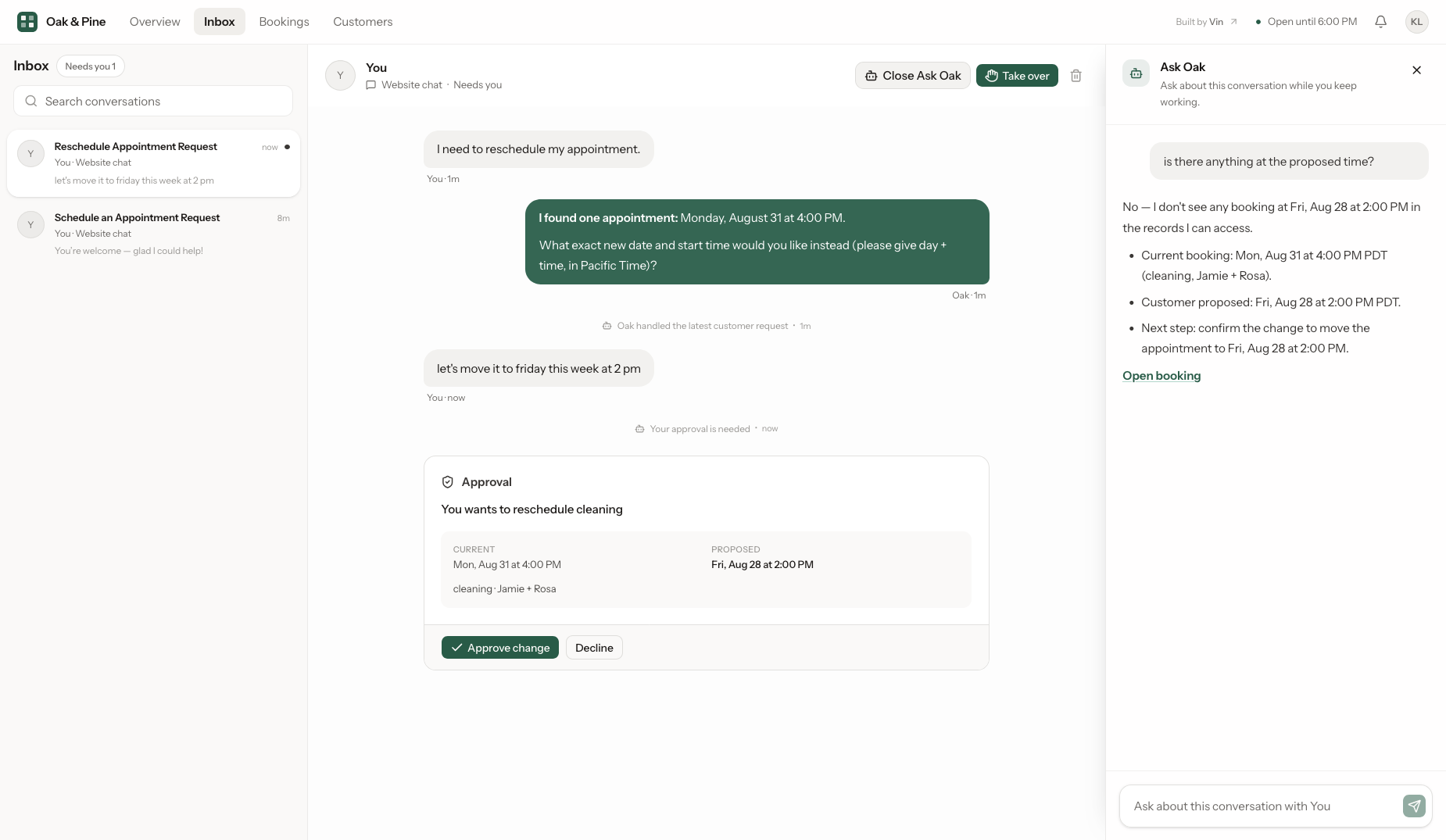
This makes the agent useful without hiding important work from the people responsible for it.
Handle more work without adding more admin
As a company or team grows, the work around each request grows too. More customers, staff and systems create more follow-ups, checks, handovers and updates.
An agent can take on some of this repeated work. This can help the existing team handle more requests without needing the same increase in admin work.
This is not about replacing people. It is about giving them more time for decisions, relationships and unusual cases.
Is it worth it?
AI is useful when it solves a real problem for the business. Start with one task that customers or staff repeat often.
Does the task take too much time? Does it slow down replies, lead to missed requests or pull staff away from more important work?
Begin with a small test and look for a clear improvement. Replies may become faster, fewer requests may be forgotten or staff may have more time for customers.
If the improvement matters to the business and is worth what the system costs to run, then it may be a good investment. If it does not solve a real problem, it's simply not worth it.
When AI is not the answer
An AI agent is not the best answer for every business.
If the business receives only a few simple requests each week, a booking form, shared calendar or reminder system may be enough. There is no need to build an agent for work that a simple tool can handle well.
An agent may also be the wrong choice when every case is different or the work depends on negotiation, personal relationships or professional judgment. These situations usually need a person who understands the customer and can make a careful decision.
The business also needs clear and reliable information. If customer records are incomplete, outdated or difficult to trust, the first step is to fix those records. An agent cannot make good decisions from bad information.
The work itself should be clear too. If staff members disagree about how to handle a request, the business should agree on the process first. Sometimes a better website, cleaner customer records or a normal automation is all that is needed.
Finally, someone must remain responsible for the system after it is built. Business rules change, connected tools can fail and customers will bring new situations. The agent needs regular checks and updates if the business plans to depend on it.
A safe way to start
Begin with one channel, such as WhatsApp, and one type of request your team handles regularly. Limit the agent to a few actions and give it only the information and access it needs.
At first, let it handle low-risk tasks, such as answering common questions or finding a customer record. For important changes, it should prepare the action and wait for a person to approve it. Give it more freedom only after it has handled those tasks safely over time and its behaviour has been sufficiently tuned to your process.
Even as the agent takes on more, customers and staff should always have a clear way to reach a person. Your team should be able to see when an action fails and review a record of important changes, so they can correct problems and improve the process over time.
A useful pilot should answer one question:
Can we rely on the agent to handle these requests safely?
Give it more responsibility once it has proved reliable in everyday use.
Better work, not more AI
An AI agent can make day-to-day operations easier by helping your team respond to requests faster and keep records up to date, while leaving important decisions with people.
To understand where it could help, I look at how your team handles requests today. I want to understand where people are kept waiting, which tasks take up staff time and which decisions need a person’s judgment.
Sometimes an agent is the right answer. Other times the business needs a smaller internal tool, a simple automation or a better way for customers to make a request.
If there’s a process in your business you’d like to improve, contact me . We can look at how it runs today and test a solution that fits your business.