
How I helped turn a founder’s AI-generated prototype into a production SaaS
Building out the customer application, making access and billing decisions, and continuing delivery after the first release.
Project details
- Role
- Full-Stack Software Engineer
- Duration
- July to November 2025
- With
- Founder
- Core stack
- Next.js, React, TypeScript, Supabase, Stripe
- Delivered
- Core customer application in about a week, with continued delivery across 11 agreed upon milestones.
AmpleLeads helps users find and collect sales leads. The founder came to me with an early AI-generated prototype. I helped build out the application and prepare it for launch.
My contributions covered accounts, payments, team access, and lead requests. Credit allocation and the underlying scraping engine were handled separately from my work.
Building the core application
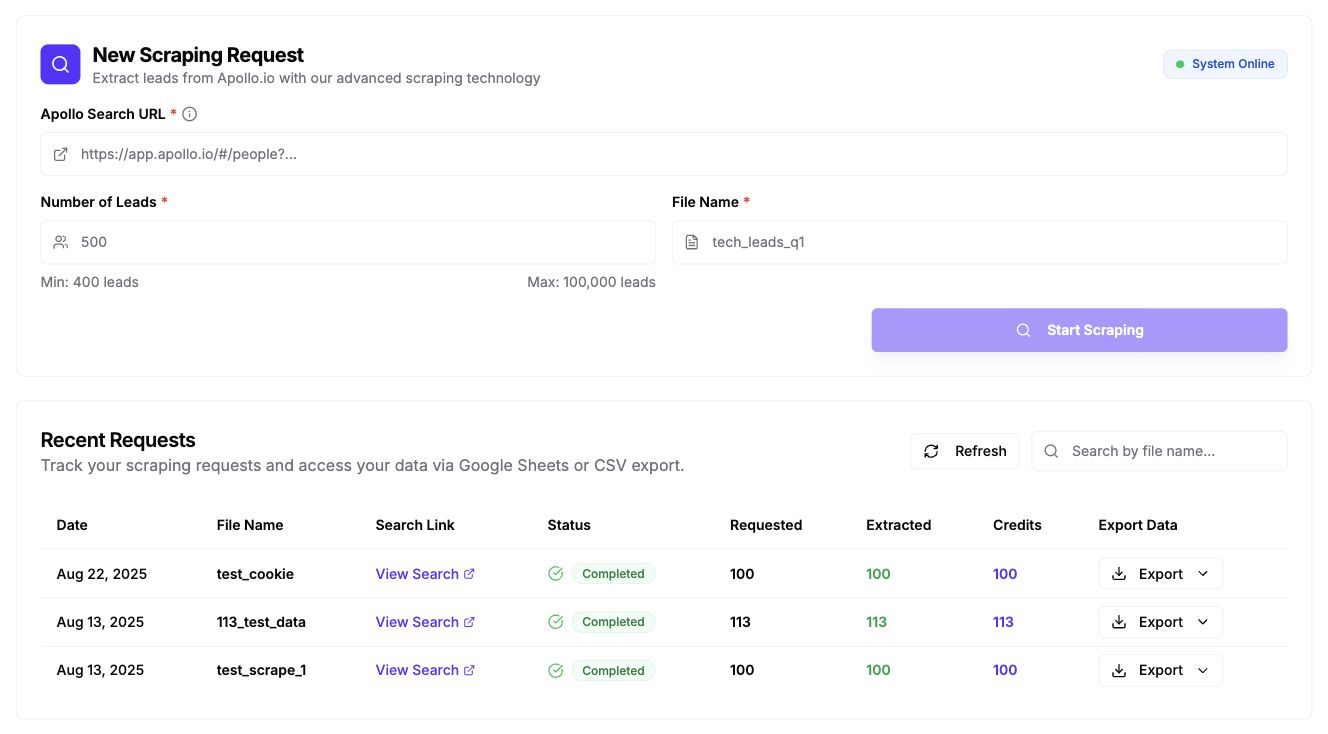
The customer application connected the steps needed to use the product: signing up, buying a subscription or credits, inviting teammates, requesting leads, and downloading results.
I started by replacing the prototype’s dummy data with real data from our database. For each lead request, users could now see how many leads they had requested and how many had been collected so far.
Giving teammates the right access
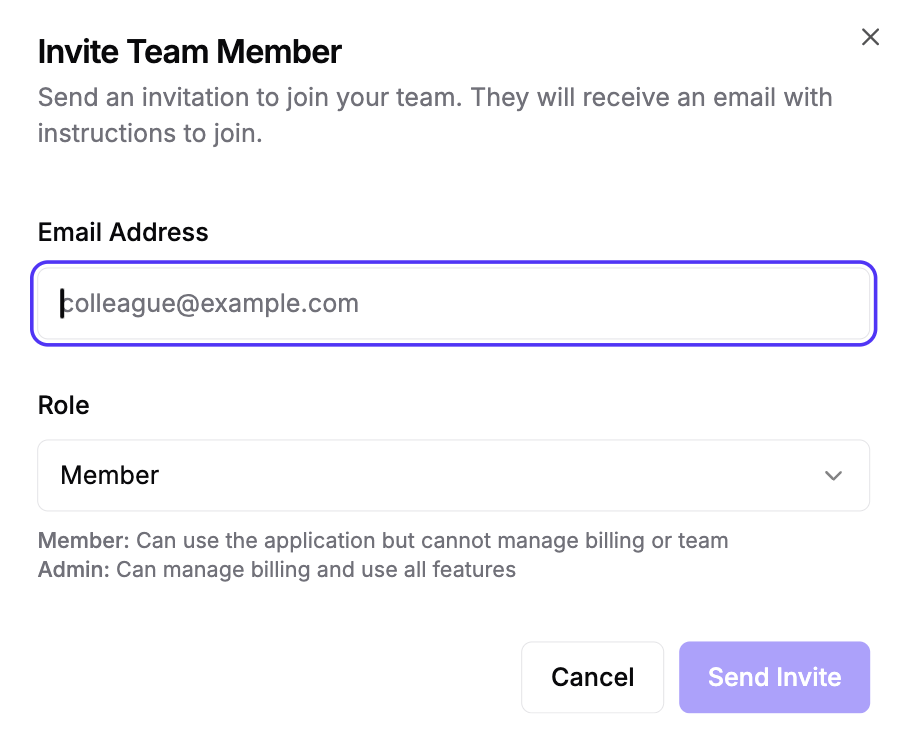
Every account needed its data kept separate from other accounts. Within each account, some team members could manage billing and the team, while others only needed access to use the product.
One question that came up was whether to disable Supabase’s row-level security, and I recommended keeping it in place so access rules were enforced at the database level. Without those rules, a mistake in the application could expose one account’s data to another.
Handling subscription changes
I used Stripe for subscriptions and one-time credit purchases. During testing, we found that switching plans deleted the customer’s existing subscription and immediately started a new one.
We agreed that upgrades would take effect immediately, while downgrades would wait until the current billing cycle ended. I changed the flow to update the existing subscription and apply those rules, rather than starting a new subscription for each plan change.
Keeping credit allocation in one place
I connected the payment flow to an existing credit-allocation process, passing along the purchase details it needed. Keeping credit updates in one place reduced the risk of adding credits twice for the same purchase.
Delivery beyond the first release
I stayed involved after launch, improving subscription management, adding referral tracking, and resolving issues as people used the product.
“He understood the requirements, communicated well, and delivered the project perfectly.”
AmpleLeads has reported over $50,000 in monthly recurring revenue.
What’s next for your product?
I help founders build out early prototypes and improve live products, from customer-facing features to the systems behind them.
Tell me what you’re working on , and we can figure out the next step.